


Recently, I decided to do a little reverse psychology: a basic question, but worded in a way that people wouldn’t usually ask. What I found wasn’t surprising in the least. It was ironic just how readily available this information really is.
In case you needed any more proof that blindly following whatever’s in the stores is sure to get you overlooked:
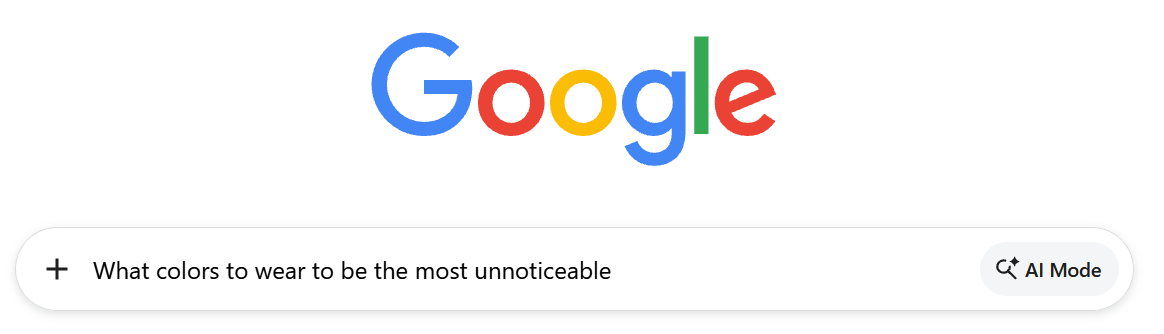
First, a direct paste right from Google:
To be the most unnoticeable, wear neutral, low-contrast, and desaturated colors—such as medium-to-dark gray, navy blue, muted brown, or basic black—that blend into everyday crowds and generate minimal psychological signal. [1, 2, 3, 4]
Best Colors to Blend In
Gray (Medium or Charcoal): Lacks high visual contrast, making the wearer easily overlooked in most urban or casual settings. [1, 2]
Navy Blue: Universally common and deeply familiar to the human eye, allowing it to fade into the background without standing out as harsh. [1]
Muted Brown / Tan / Khaki: Possesses low emotional arousal and a near-neutral quality that registers as absent or non-engaging in a crowd. [1]
Black: While stark black can look dramatic or intentional in certain contexts, everyday solid black clothing acts as an absence of light [1] and helps the wearer slip past casual glances. [1, 2]
What to Avoid If You Want to Be Unnoticed
Bright or Neon Colors (neon yellow, hot pink, bright orange): Immediately draw the human eye and spike visual recognition.
High-Contrast Patterns or Multicolored Outfits: Break up your silhouette and ensure people notice your presence.
Stark White: Creates sharp, high-visibility contrast against almost any background. [1, 2, 3]
Are you trying to blend in for a specific environment (like a crowded city, an office, or outdoors), or looking for a full low-profile outfit strategy?
Are you just as frustrated as I am that almost every clothing brand builds its entire collection on boring, bland, barely there colors?
Just an example from well-known clothing sites as well as Google Shopping.


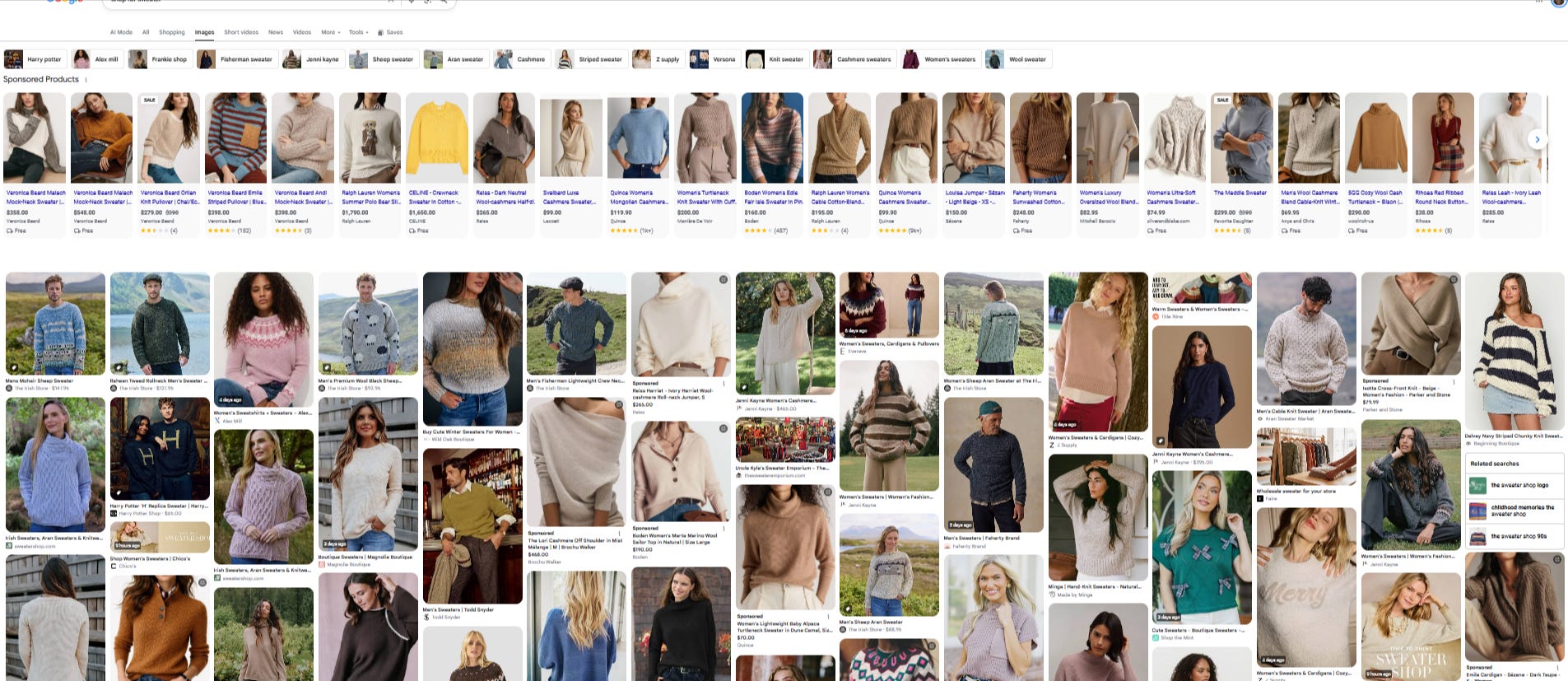
Yawn! How many of these sweaters unwhittingly fit the rule of “dress to be unnoticeable” and “dress to be chic/sophisticated/effortless/old money/etc.”?
Clothes As a Strategy For Success
Most of us don’t know we’re dressing to be invisible. We want—no—NEED to keep making an impact at work or in business. Whether it’s financial, we do, after all, have bills to pay, kids’ education to finance, retirement to save for, and, well, the gas is kind of high too. Or you’re involved in important work that requires others to hear your message, open their wallets, or trust your judgment.
Regardless of your “why,” you certainly won’t be well served dressing to be invisible. And the problem is the lineup of clothes that are recommended are the very thing that is all over the clothing racks season after season.
Don’t Walk Around Thinking “I Need To Be Noticed”
We live our lives, work hard, learn our jobs, and rarely consider how much impact our clothes make. The things I hear most often are I dress mostly for comfort. My work should speak for itself. I want to dress to feel attractive.
Whether we’re dressing too blah or dressing too attractively (attracting someone and getting someone’s trust, respect, and credibility aren’t the same), we’ll create more friction between where we are and where we want to go professionally. The sweet spot is using strategies that help you come off as competent and trustworthy and looking good. Think: “I know what I’m doing, and I can deliver on my promise, and I need this to be extremely obvious at one glance.”
Look Like You Know What You’re Doing
Whether you want to climb the ladder at work or succeed in business, you can’t leave your clothing to chance. Would you leave your accounting, taxes, car maintenance, or any other important matter to chance? A professional wardrobe is an important tool.
3 Rules to Instantly Look Like You Know What You’re Doing
Color
There are two seemingly competing rules:
1. The darker the color, the higher the authority. But…
2. Wearing brighter colors can enhance the luminosity of your face.
How to reconcile the two: if you feel like you’re being overlooked or are having a hard time getting others to take you seriously (think: you’re successful and know your stuff, but every new connection is an uphill battle; you have an upcoming pitch; your success got you where you are, but the next step seems far off), you’re not alone.
This is especially true if you look very young or feminine, have soft facial features, or are soft-spoken.
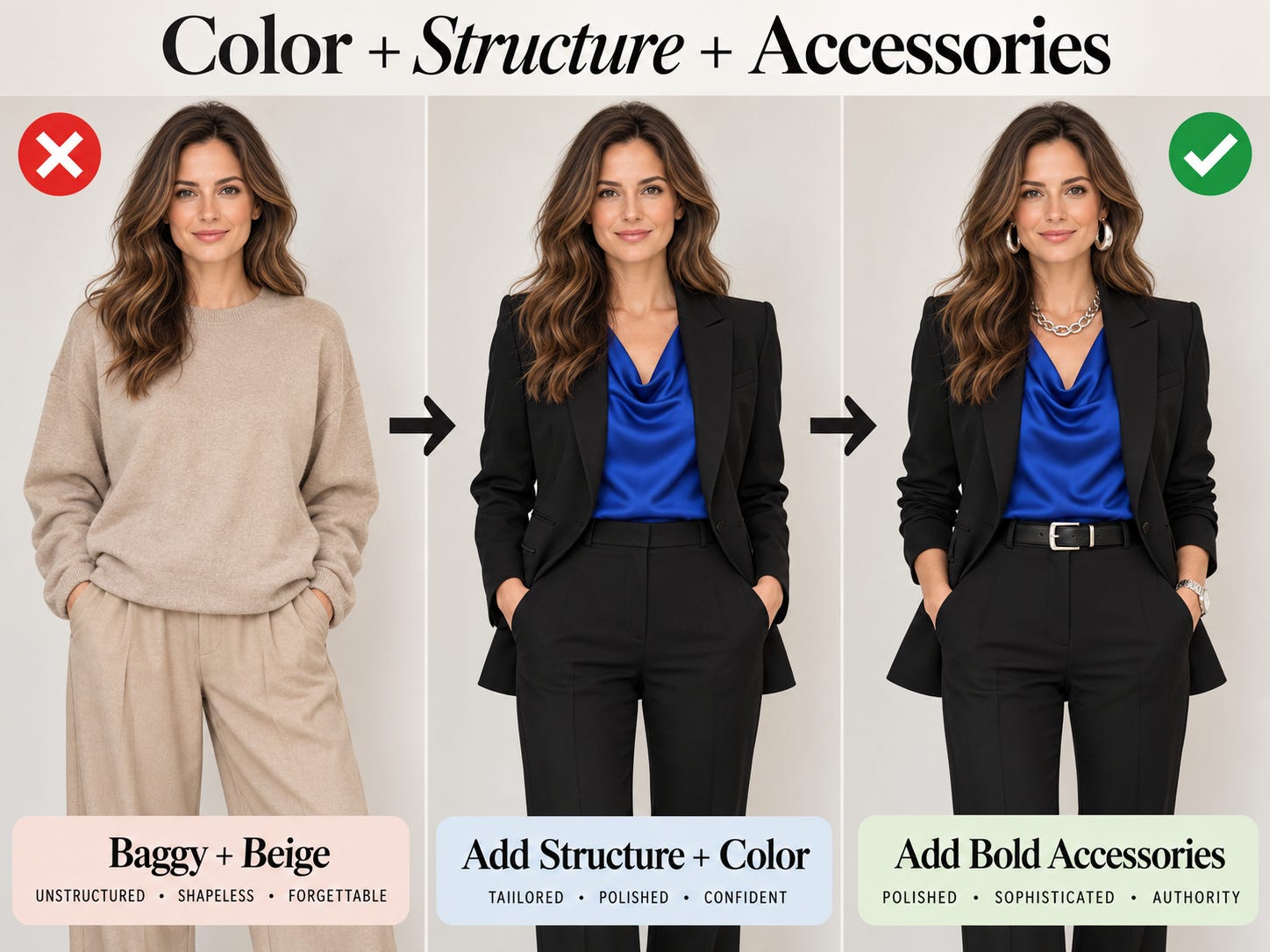
In general, having staples in black, navy, burgundy, espresso, or other dark neutrals is a great foundation for a wardrobe. Try to have some button shirts, shells, and other layering pieces for under jackets to give you a boost of color near the face. If you can’t stand color, try them in white. Think of these like the white sheet of paper a photographer might place under your face when taking a headshot.
The younger you are, the less you need the “hack” of using bright colors to bring light to the face. If you’re under 35, you can likely wear black and other darker (read: authoritative) colors without much of a penalty to your facial glow, though I still recommend strategic color placement, accessories, and bold lip color to focus the eyes on the face.
With my 35+ clients, I definitely recommend a pop of color at the collar whenever possible. And follow this rule faithfully myself, having noticed long ago that dark colors suck the color right out of my face.
Structure:
Rule: The more structure, the higher the authority.
Whether you’re working from home or meeting clients at their location or working from your office, well-fitting structured staples can be just as comfortable as their more loungy counterparts. It’s really about the fit (get it tailored), breathability (think predominantly high-quality natural fibers), and comfier layers underneath.
These days, there are many high-authority pants and jackets in exquisite velvets, stretchy knits, and breathable blends.
Purposeful Accessories:
Rule: Accessories are an image strategy, not vanity.
Please don’t think that cute necklace with the kids’ initials and tiny hoops is the same as chunky earrings and a statement necklace that shows some bold sophistication.
If you have cool undertones, start collecting statement silver-toned pieces that are special to you. Wear them on non-special days!
One of our clients was a recent college grad and wanted to be taken seriously in the competitive D.C. job market. She came in wearing the typical little huggie earrings and chain necklace with a charm. They didn’t look bad, but they looked simple. Simple and understated have been sold to us as sophisticated, but that’s a lie.
The rule is simple: if you can name which one looks more or less professional, then so can everyone’s brain before they decide if they’re going to hire one over the other.
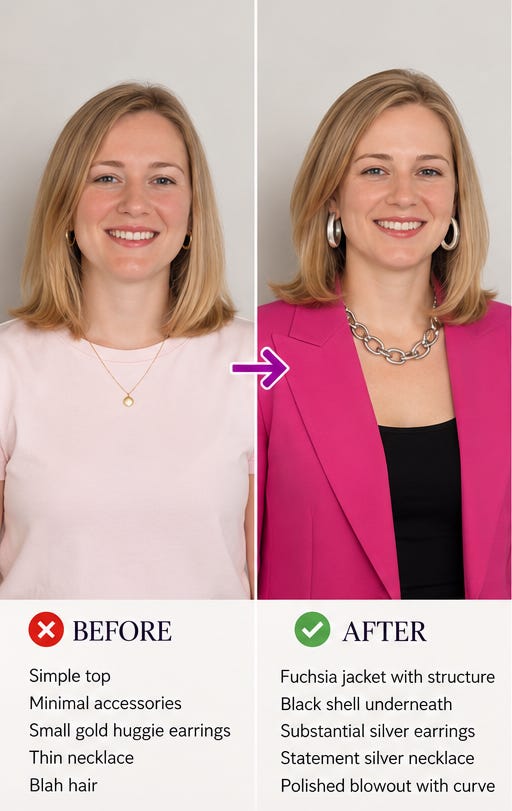
Become known as the one who’s always put together and bold, and you’ll be top of mind for opportunities that require someone who knows what she’s doing.
Paid Section: Accessories Basics for Every Occasion
Accessories aren’t just decoration. They’re one of the easiest ways to turn ordinary clothes into a polished, intentional outfit. And you don’t need a drawer full of jewelry to do it!
Here’s your checklist for building a versatile accessory collection that works for everything from everyday errands to important meetings.
